Moving to Reno This Year? What Your First Winter Actually Looks Like
I'm Jodi Kruse, a Reno, Nevada real estate agent with Sierra Sotheby's International Realty, licensed in Nevada since 2012, and I've walked more relocating buyers through their first Reno winter as homeowners than I can count. If you closed on a home here this summer or fall, or you're about to, this is the season nobody asks me about during the excitement of buying, and it's the one that catches new owners off guard the most.
When Does Winter Actually Arrive in Reno?
Later than most new owners assume, and later than it used to be. According to a Climate Central analysis of NOAA temperature data from 1970 to 2024, Reno's average first freeze, the first date the low temperature drops to 32 degrees or below, has shifted from the third week of September in 1970 to the first week of November now, a 41-day delay, the largest shift of any city in that nationwide study. Last year, Reno's actual first freeze didn't arrive until November 19, the latest first freeze the city has ever recorded, breaking the previous record set in 2016.
I mention this because it changes the practical timeline I give new owners. The old rule of thumb, "get everything winterized by mid-October," is still a safe target, but it's no longer the hard deadline it once was. What hasn't changed is that once that first freeze does hit, it arrives with real consequences for a home that wasn't prepared for it.
If you've spent your life in California or another warmer climate, or you rented here before buying, this winter is the first time the weather becomes your responsibility instead of your landlord's. That shift catches more new homeowners off guard than almost anything else about relocating here.
What's the One Thing That Always Catches New Homeowners Off Guard?
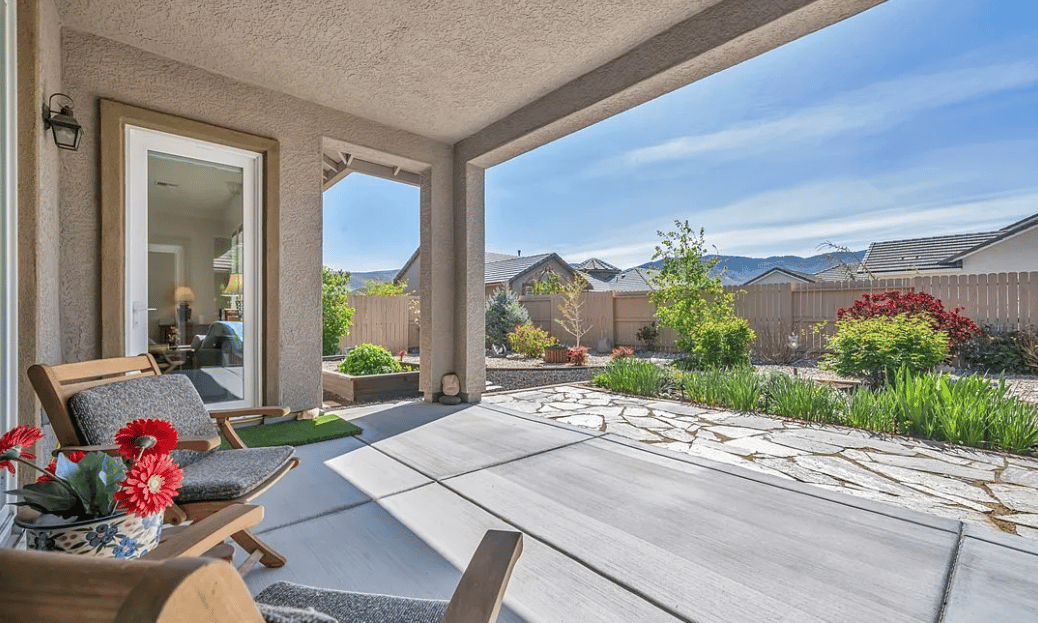
In my experience, it's the sprinkler system, every time. If your home has an irrigation system, and most South Reno homes do, it needs to be professionally blown out with compressed air before the first hard freeze. Water left sitting in the lines freezes, expands, and cracks pipes and valves, which turns into an expensive spring repair that a $75 to $150 winterization appointment would have prevented entirely.
Given that Reno's first freeze now typically lands in late October to early November rather than late September, I tell clients they have a bit more runway than the old advice suggests, but I still recommend scheduling this by mid-October. Contractors book up as the season turns, and an unusually early cold snap, which still happens even with the later average, doesn't wait for your calendar.
Do I Need to Worry About My Roof and Gutters Before Winter?
Reno doesn't get the snow totals of Tahoe, but gutters clogged with fall leaves become a real problem once that debris freezes solid and ice starts backing up under roof edges. Clearing gutters before the first real snowfall, and confirming your roof doesn't have obvious deferred maintenance, matters here in a way it might not have in a milder climate. If you had a pre-listing walkthrough or a home inspection when you purchased, that report is worth revisiting specifically for anything flagged about the roof or gutters, before the season, not after the first storm.
Who's Responsible for Snow Removal, Me or My HOA?

This is one area where I genuinely can't give a blanket answer, because it depends entirely on your specific neighborhood and HOA. Some communities, particularly newer planned developments, handle snow removal on shared roads and common areas as part of HOA dues. Others leave driveways and walkways entirely to the homeowner. If you're in Galena Forest or another higher-elevation area near the Mount Rose corridor, you'll see real accumulation more consistently than a home in Sparks or lower South Reno, and that's worth factoring into how seriously you take this before the season starts.
If you don't already know what your HOA covers and what falls on you, check your HOA documents or call your management company now, not the morning after the first storm.
What Should I Actually Do Before the First Hard Freeze?
If you take nothing else from this post, get these four things done before mid-October, ahead of Reno's typical late-October to early-November first freeze window. Schedule a professional sprinkler blow-out. Clear your gutters and check for any roof concerns from your inspection report. Confirm exactly what your HOA does and doesn't cover for snow and ice removal. And locate your home's main water shutoff valve, so you're not searching for it in an emergency during a hard freeze.
None of this requires expertise you don't have yet. It just requires doing it on a timeline, not reacting after the season makes it urgent.
If you're still deciding whether Reno is the right move at all, I wrote an honest breakdown of what buyers get right and wrong about moving here. And if you're already searching and want to talk through what a specific home or neighborhood means for your first winter as an owner, find current listings at renosrealtygroup.com/home-search/listings or call me directly at 775.233.1190.
About This Analysis
Topic: First-winter homeownership preparation for new Reno-area residents
Climate data source: Climate Central analysis of NOAA temperature data, 1970–2024, as reported by Nevada Current and This Is Reno, October 2025; NOAA 1991–2020 climate normals for frost date context
Key data point: Reno's average first freeze has shifted 41 days later since 1970, from the third week of September to the first week of November, the largest shift among the 204 U.S. cities analyzed. Reno's actual first freeze in fall 2025 occurred on October 18.
Homeownership guidance: Based on Jodi Kruse's firsthand experience advising relocation clients, license S.169610, Sierra Sotheby's International Realty
Limitation: Climate averages describe typical timing, not a guarantee for any given year. An early cold snap can still occur well before the average date, which is why the practical guidance in this post recommends completing preparation by mid-October rather than waiting for the statistical average.
Key Takeaways
- Reno's average first freeze has shifted 41 days later since 1970, now typically landing in late October to early November instead of late September, according to a Climate Central analysis of NOAA data.
- An unwinterized sprinkler system is still the most common and most avoidable first-winter mistake among new Reno homeowners, regardless of the shifting average.
- Snow removal responsibility varies significantly by neighborhood and HOA. Confirm what's covered before the first storm, not after.
- Higher-elevation areas near the Mount Rose corridor and Galena Forest see meaningfully more accumulation than Sparks or lower South Reno.
- Complete winterization tasks by mid-October regardless of the later average, since an early freeze can still occur ahead of schedule.
Frequently Asked Questions About Your First Winter as a Reno Homeowner
When should I winterize my sprinkler system in Reno?
By mid-October, to be safe. Reno's average first freeze has shifted to the first week of November in recent decades, and last fall's freeze didn't arrive until November 19, a new record, but averages aren't guarantees, and scheduling early protects against an earlier-than-typical cold snap.
Does Reno get a lot of snow?
Reno itself typically sees moderate snowfall compared to nearby Lake Tahoe and higher-elevation areas like Galena Forest and the Mount Rose corridor, which can see significantly more accumulation. Your specific experience depends heavily on your neighborhood's elevation.
Is snow removal my responsibility or my HOA's?
It depends entirely on your specific HOA and neighborhood. Some cover shared roads and common areas as part of dues, others leave driveways and walkways to the homeowner. Check your HOA documents directly rather than assuming either way.
What should I do before my first winter as a new homeowner here?
At minimum, schedule a professional sprinkler winterization, clear your gutters, confirm your HOA's snow removal responsibilities, and locate your home's main water shutoff valve.
I'm still deciding whether to move to Reno. Does winter change the calculation?
It shouldn't be a dealbreaker, but it's worth going in with accurate expectations rather than assuming Reno's winters are as mild as coastal California's. I wrote a fuller, honest breakdown of what buyers get right and wrong about moving here, covering this alongside the rest of the picture.
About Jodi Kruse
Jodi Kruse is a Reno, Nevada real estate agent with Sierra Sotheby's International Realty. Licensed in Nevada since 2012, she specializes in residential sales, luxury properties, relocation and buyer and seller representation throughout Northern Nevada and the Nevada side of Lake Tahoe, including Incline Village and Crystal Bay.
Jodi holds the RENE, SRS and ABR designations and has personally closed more than $100 million in real estate transactions.
Jodi Kruse | Nevada Real Estate License S.169610 | Sierra Sotheby's International Realty775.233.1190 | RenosRealtyGroup.com