The Inspection Issue That's Killing Deals in South Reno Right Now
It is not the roof. It is not the foundation. It is not a mold finding or a drainage problem or a structural crack.
The inspection item that is stalling and killing deals in established South Reno neighborhoods right now is a working HVAC system that is too old.
Not a system that has failed. Not a system that is leaking refrigerant or throwing codes or not cooling to temperature. A system that came on when the inspector turned it on, ran through the cycle, and got flagged anyway, because it is fifteen years old and the inspector noted its age in the report with a recommendation to budget for replacement.
I have watched that finding derail transactions in Caughlin Ranch, in Galena Forest, and in the older sections of Arrowcreek more times in the last eighteen months than I have in any comparable period in fourteen years of doing this work. The system works. The deal still falls apart, or nearly does. And the negotiation that follows is one of the hardest I navigate because there is no single answer that works every time.
Why a Working System Is Still a Problem
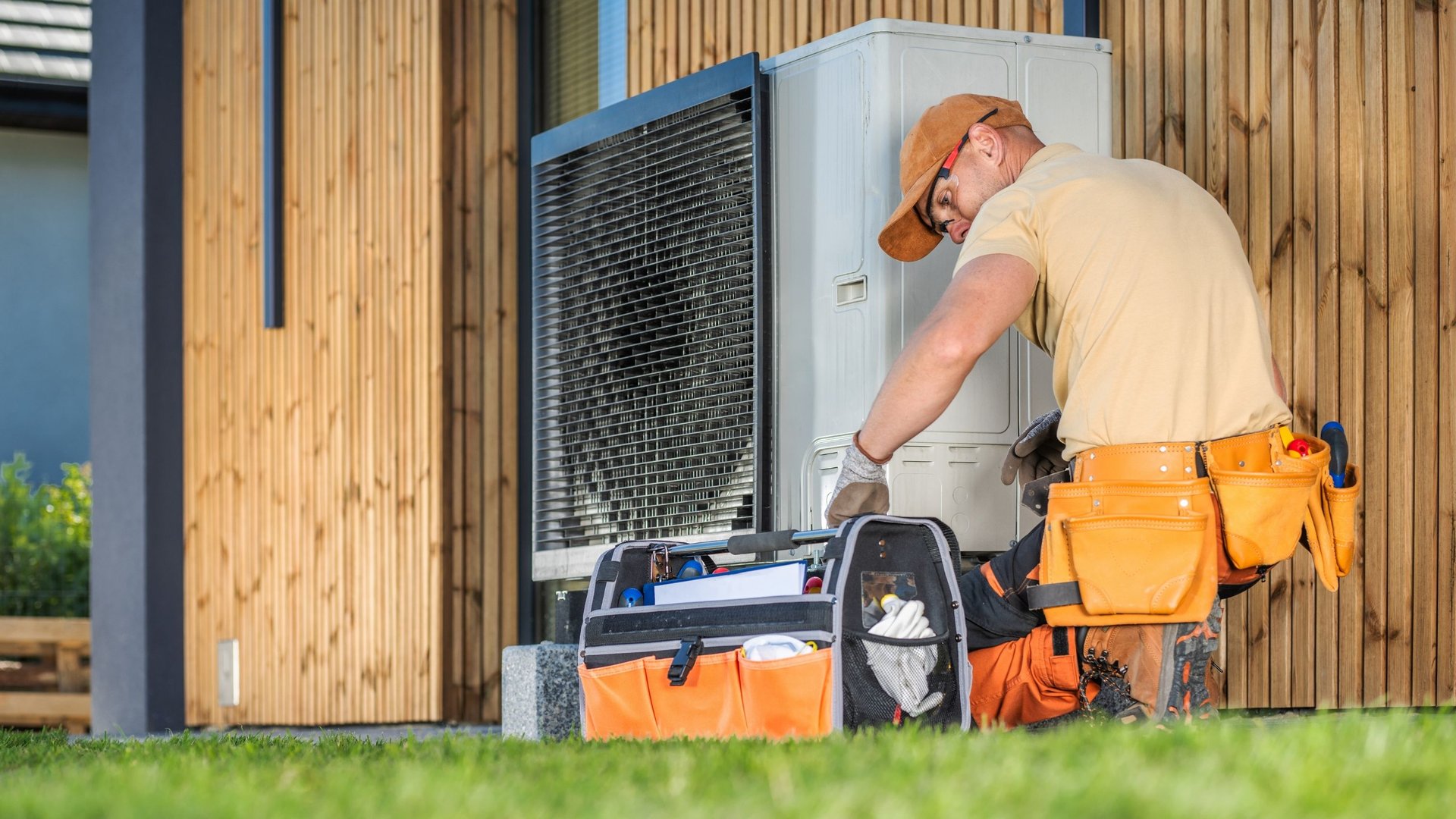
The average lifespan of a residential HVAC system is fifteen to twenty years depending on the brand, the maintenance history, and the climate. Reno's high desert conditions, hot dry summers, cold winters, significant temperature swings, put real demand on HVAC systems. A system that has been running in Reno for fifteen years has worked hard.
When an inspector flags a fifteen-year-old system, they are not saying it is broken. They are saying it is at or approaching the end of its expected useful life. The distinction matters legally and practically. What the buyer hears is different from what the inspector wrote: they hear "this system might fail and I will be the one who owns it when it does."
That fear of future cost is what drives the negotiation, not the current condition of the system. And it is why the standard responses, "the system is working fine," "it was serviced last year," "we'll throw in a home warranty," often do not fully resolve the buyer's concern.
Repair costs for common HVAC issues in Reno right now run roughly $500 to $1,500 depending on the specific problem. A capacitor, a contactor, a refrigerant recharge. Routine maintenance items that any system might need regardless of age.
Full replacement is a different conversation. A new HVAC system in a South Reno home, unit, installation, and labor, typically runs $11,000 to $20,000 depending on the size of the home, the configuration of the system, and the contractor. In a larger Caughlin Ranch home or a Galena Forest property with more square footage to condition, the number sits toward the higher end of that range.
The buyer who is flagging the HVAC system is not calculating the repair cost. They are calculating the replacement cost and asking the seller to share the risk of a future event that may or may not happen on any particular timeline.
Where This Is Showing Up Most in South Reno
The HVAC flagging problem is concentrated in the neighborhoods where the housing stock is oldest, which in South Reno means Caughlin Ranch, Galena Forest, and the older sections of Arrowcreek.
Caughlin Ranch (89519) has the highest density of this issue in my current experience. Homes built in the late 1980s through the mid-1990s are now thirty to forty years old. Many of them have had one full HVAC replacement at some point and are now on their second system, which itself may be fifteen to eighteen years old. A seller in Caughlin Ranch whose home was built in 1992 and who replaced the HVAC system in 2008 is now presenting a sixteen-year-old unit to a buyer who is reading the inspection report the same way they read every other inspection report in 2026: looking for the things that could cost them money.
Galena Forest (89511) compounds this problem with a different variable. The larger footprints common in Galena Forest, many homes in the 3,000 to 4,500 square foot range, require larger and in some cases multi-zone HVAC systems. When one of those systems is flagged, the replacement estimate is not $11,000. It is $16,000 to $20,000 or more depending on the configuration. The dollar figure on the table in a Galena Forest HVAC negotiation is meaningfully larger than in a smaller Caughlin Ranch home, and buyers know it.
Older Arrowcreek sections (89511) present a variation of the same problem. Arrowcreek's development spans multiple decades and the homes built in the earlier phases of the community are now twenty to twenty-five years old. A buyer paying $2 million for a home that needs a new HVAC system is not more accepting of that cost than a buyer paying $900,000, in some cases they are less accepting, because the expectation of move-in-ready condition scales with price.
What Sellers Are Doing And What Actually Helps

I want to be direct about something that most real estate content does not say out loud: I have not found one approach to the HVAC negotiation that works every time. The situation is genuinely variable, and sellers who go in expecting a clean solution are often disappointed. What I can tell you is what actually helps versus what tends to fall short.
What helps most: replace before listing.
This is the option that eliminates the negotiation entirely. A seller who replaces a fifteen-year-old HVAC system before the home goes to market removes the inspection finding, removes the buyer's fear of future cost, and in many cases recovers a significant portion of the replacement cost through a cleaner transaction at a stronger price. A buyer who does not have an HVAC concern is not using HVAC as leverage. That is worth something that does not show up cleanly in the math but shows up in outcomes.
The objection I hear from sellers is consistent: "I don't want to spend $15,000 on a system for a buyer to enjoy." That is a legitimate concern. The response is that the alternative is not keeping $15,000, it is often a $15,000 price reduction plus carrying costs plus the accumulated stress of a deal that nearly fell apart. The pre-list replacement is not always the right call, but it is the right conversation to have honestly before the listing launches rather than at the inspection table.
What sometimes helps: a seller credit.
A seller credit at closing, money the buyer can use toward a future HVAC replacement or other closing costs, is a cleaner resolution than a price reduction in many cases because it addresses the buyer's concern directly. A $7,000 to $10,000 credit toward a future replacement splits the cost without either party bearing it entirely. This approach works when the buyer is willing to accept the system as-is with some financial cushion for future replacement. It does not work when the buyer has decided the system needs to be replaced before they move in, regardless of credit.
What sometimes helps: a home warranty.
A home warranty that covers HVAC systems can reduce buyer anxiety about future repair costs. Costs typically run $600 to $900 for a one-year policy. The limitation is significant: home warranties frequently deny HVAC claims on the grounds that the system showed pre-existing age-related wear. A buyer who learns that the warranty may not cover the exact failure they are worried about is often less comforted than the seller expected. Home warranties are worth including, they help some buyers in some situations, but they are not a reliable resolution to a serious HVAC concern.
What rarely helps: "the system is working fine."
This statement is true in most cases and almost never resolves the negotiation on its own. The buyer knows the system is working. The inspector told them it was working and told them it was old in the same sentence. The buyer's concern is not the present condition, it is the future cost. A statement about the present does not address the future.
The Honest Version
Here is what I tell sellers in Caughlin Ranch, Galena Forest, and older Arrowcreek when we walk through the home before listing.
If your HVAC system is over fifteen years old, it will be flagged in an inspection report. I am certain of that. What I am not certain of is how the buyer will respond to that flagging, because buyers vary. Some buyers accept a warranty and move on. Some want a credit. Some want the system replaced before they close. Some walk.
What I can tell you is that knowing about the system now, before the listing goes live, gives us options that we do not have after the inspection report is in the buyer's hands. We can have the system professionally serviced and document the service record. We can get a replacement quote so we know the actual number before a buyer names a number. We can decide whether a pre-list replacement makes financial sense for this specific home at this specific price point. We can build the system's age into the pricing discussion honestly rather than pricing as though a twenty-year-old HVAC system is not going to come up.
The sellers who navigate this situation best are the ones who know about it in advance and make a deliberate decision about how to handle it. The sellers who struggle are the ones who find out at the inspection, have not thought about it before, and are now making a financial decision under time pressure with a buyer on the other side of the table.
I cannot guarantee any particular outcome. What I can do is make sure you are not surprised by something I could have told you before the listing launched.
If you are thinking about selling a home in Caughlin Ranch, Galena Forest, or Arrowcreek and you want an honest assessment of what the inspection is likely to surface and what your options are before you list, start with a home valuation at renosrealtygroup.com/home-valuation or call me at 775.233.1190.
Frequently Asked Questions From Sellers Facing HVAC Inspection Issues
How old does an HVAC system have to be before it becomes a deal problem?
In my experience, fifteen years is the threshold where flagging becomes routine and buyer concern becomes meaningful. Systems in the twelve to fourteen year range get noted but often with less alarm. Systems at fifteen years and older, especially when they have not been recently serviced, generate the kind of inspector language that produces the negotiation I described above. Reno's climate accelerates wear relative to milder markets, which is part of why the threshold feels lower here than in some comparable markets.
Should I replace my HVAC before listing?
It depends on the age, condition, and configuration of your system, the price point of your home, and what the pre-list replacement would cost relative to the likely impact on your sale price and timeline. This is a conversation I have specifically with every seller in an established South Reno neighborhood before we decide on a listing strategy. There is no universal answer, but there is a right answer for your specific situation, and I would rather have that conversation before the listing goes live.
Will a home warranty solve this?
Sometimes partially. A home warranty reduces buyer anxiety about future repair costs but does not eliminate it, particularly when buyers learn that HVAC claims on older systems can be denied. A warranty is worth including, it is a low-cost gesture that helps some buyers, but it should not be the only response to a serious HVAC concern.
What if the buyer asks for a full replacement?
This happens. A buyer who has decided they are not willing to close without a new HVAC system is a buyer whose request needs to be evaluated against the full picture of the transaction: how strong is the offer overall, how much leverage does the seller have given competing interest, and what is the actual cost of a replacement for this specific home. I negotiate these situations on a case-by-case basis. What I do not do is treat a full replacement request as automatically unreasonable or automatically acceptable, it depends on the numbers and the transaction.
Is this specific to South Reno or is it happening everywhere?
The HVAC flagging issue is not unique to South Reno, but the concentration in Caughlin Ranch, Galena Forest, and older Arrowcreek makes it more common in established South Reno neighborhoods than in newer 89521 subdivisions where the housing stock is younger. Damonte Ranch and Curti Ranch homes built in the 2000s and 2010s generally have systems that are not yet approaching the flagging threshold. This is primarily a problem of the established neighborhood market, not the entry-level new construction market.
About Jodi Kruse
Jodi Kruse is a Reno, Nevada real estate agent with Sierra Sotheby's International Realty. Licensed since 2012, she specializes in home sales, luxury properties, relocations, and buyer/seller representation across Northern Nevada and the Nevada side of Lake Tahoe, including Incline Village and Crystal Bay. She holds RENE, SRS, and ABR designations and has closed over $100M in transactions. Contact: 775.233.1190 | https://renosrealtygroup.com/