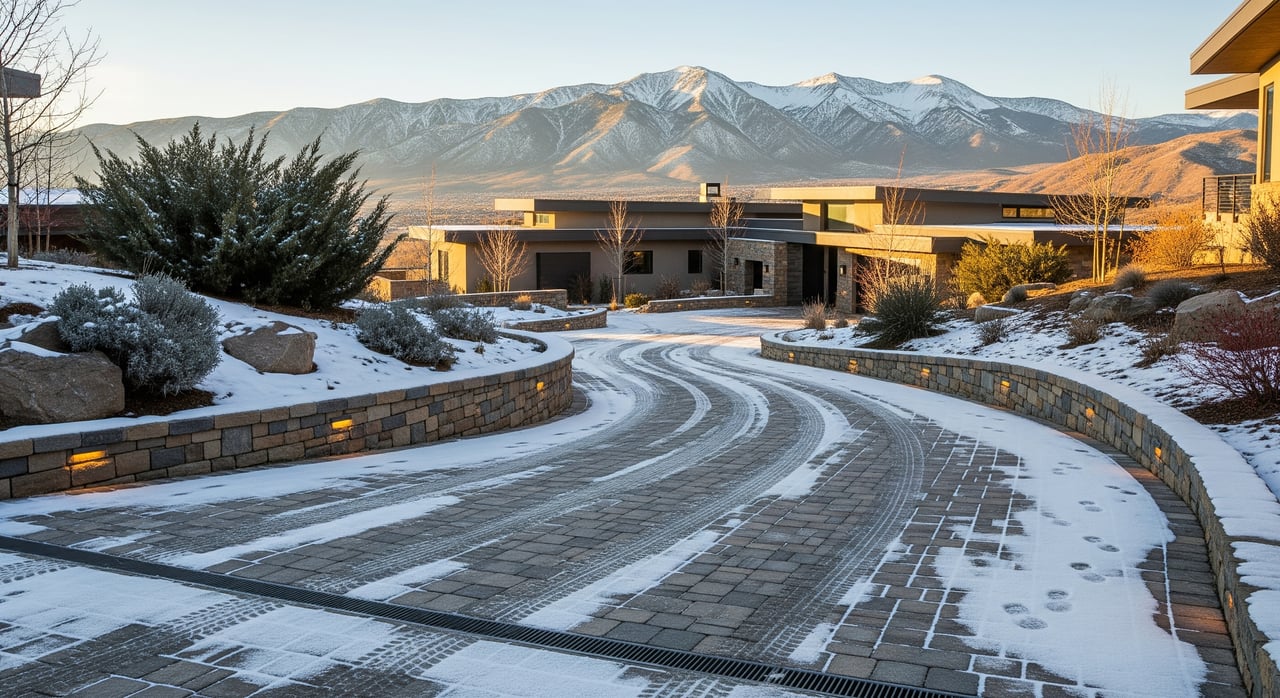
Are you worried about a steep driveway as winter storms roll into University Ridge? You want safe access for you and your visitors, plus curb appeal that holds up in cold, icy weather. In this guide, you’ll learn practical steps for traction and de‑icing, drainage fixes for sloped approaches, and what to expect from city and county service during storms. Let’s dive in.
Why winterize a hillside driveway
Winter precipitation can pack down on a slope and turn into slick ice by morning. Meltwater that flows downhill can refreeze in shaded spots and create hidden hazards. A little planning improves safety, keeps your approach presentable for showings, and reduces last‑minute stress when a buyer is on the way.
Who clears your street in University Ridge
Most in‑city neighborhood streets are handled by the City of Reno Public Works, while major highways and some high‑priority routes fall to the Nevada Department of Transportation. Washoe County maintains county roads outside city limits. Check which agency maintains the street in front of your property so you understand service expectations.
City operations typically prioritize emergency routes, major arterials and collectors, transit routes, and then residential streets. Pre‑treatment with brine is usually focused on higher‑priority roads before storms. Residential streets and cul‑de‑sacs may be serviced later, and private driveways are not cleared by the City. Expect a plow windrow at the driveway mouth when crews pass and plan to clear it for access.
Traction and de‑icing that work on slopes
Choosing the right approach depends on temperature, sun exposure, and how fast you need results. Use the minimum effective amount and follow product labels to avoid residue, corrosion, or plant damage.
- Sand or grit: Improves grip immediately without melting ice. Choose a coarse ¼–½ inch aggregate for tires and footsteps, and reapply as traffic moves it.
- Sodium chloride (rock salt): Cost‑effective and works best when temps stay near or above the high teens. It can be corrosive and may harm vegetation.
- Calcium chloride: Effective at lower temperatures and acts fast as it releases heat when dissolving. It costs more and can be more corrosive.
- Magnesium chloride: Middle‑ground performance with somewhat lower corrosivity than sodium chloride, but still adds chlorides to soil and water.
- Urea and fertilizer‑based melts: Can reduce ice but are not ideal for large areas and may impact waterways.
For quick safety on show‑day, target icy patches with traction material first. Use de‑icer sparingly on compacted ice where melting runoff can drain to non‑sensitive areas. If you want to get ahead of a storm, pre‑treating with a brine can help keep snow from bonding to the surface when applied just before the first flakes.
Drainage fixes for sloped approaches
Good drainage keeps meltwater from pooling and refreezing. Start with simple steps and scale up if you see recurring ice.
Low‑cost steps you can do now
- Clear gutters, valley pans, driveway channels, and street grates so meltwater can flow freely.
- Keep the driveway mouth open during storms by removing plow windrows promptly.
- Add a temporary channel at the bottom of the drive to deflect slush and water away from the entry.
- Restore soil and vegetation along edges to absorb runoff when weather warms.
Medium‑term improvements
- Install a surface channel drain across the driveway at the low point to intercept water and direct it to an approved outlet.
- Add a French drain upslope if groundwater or seepage feeds the surface in cold snaps.
- Regrade the driveway approach, if feasible, to soften a steep apron near the street.
- Improve the surface finish: textured asphalt or broom‑finished concrete offers better grip than very smooth finishes.
Long‑term investments
- Heated driveway systems: Electric mats or hydronic tubing can keep the approach clear with minimal chemicals. They are expensive to install and operate but can be a strong selling feature and meaningful safety upgrade.
- Permeable paving: Reduces runoff volume when paired with proper subsurface drainage.
Before changing drainage or tying into storm systems, confirm permit needs with local Public Works. Low‑profile drains near the street can be damaged by plows, so coordinate any work in or near the public right‑of‑way.
Show‑day prep checklist
Use this quick routine to keep access safe and your presentation polished.
- Clear a 3–4 foot pedestrian path from parking to the front door and a 10–12 foot turning/parking area if space allows.
- Spread coarse traction material on steps, the main walkway, and the vehicle path. Top up as it scatters.
- Spot‑treat stubborn ice with de‑icer, applying only what the label recommends.
- Shovel snow downhill to reduce refreeze and keep the driveway mouth open after plows pass.
- Place a boot tray and welcome mat inside to protect floors and tidy up the entry.
- Sweep excess sand from porches and visible walkways before photos or showings.
- Clear overhangs so meltwater does not drip and refreeze at the threshold.
What to disclose in your listing
Transparency builds trust. If the driveway is steep, note that winter tires or all‑wheel drive may be helpful in snow. Highlight any upgrades like heated sections, channel drains, or recent resurfacing. Keep the language neutral and factual.
Coordinating with City and County services
Storm operations focus on keeping emergency and high‑priority routes open first. Residential timing depends on storm severity and resources. Windrows at driveway mouths are normal byproducts of plowing and are the property owner’s responsibility to clear.
Sign up for city and county storm alerts so you know when operations begin and which routes are treated. If your private approach is unusually steep and could impede emergency access, contact Reno Public Works or the non‑emergency fire line ahead of severe weather to discuss options. Always confirm permits before any drainage work that touches the public right‑of‑way.
Typical costs and planning tips
Budget ranges vary by site, but these ballparks can guide early planning.
- Channel drain across driveway: Often in the low‑to‑mid four figures depending on complexity and connections.
- Heated driveway system: From several thousand dollars for a small electric‑mat zone to tens of thousands for larger hydronic systems.
- Private snow removal: Seasonal or per‑storm contracts vary by driveway length and pitch.
Start with a safety kit: a sturdy shovel, an ice scraper, a covered bin of coarse traction material, and a small supply of de‑icer. If you see recurring pooling or ice sheets, schedule a professional assessment before peak winter.
Quick preseason checklist
- Confirm who maintains your street so you can set realistic expectations.
- Inspect the driveway surface and edges and clear debris from gutters and grates.
- Stock traction material and de‑icer, and stage snow tools where you can reach them.
- Book bids for drainage or surface upgrades if recurring ice is a problem.
Ready for market support
If you’re planning to list in winter, you do not have to tackle this alone. Reno’s Realty Group can help you prioritize safety fixes, coordinate vetted vendors, and present your home with polished winter visuals that tell the right story to buyers. Schedule Your Free Concierge Consultation today to start a plan that fits your timeline and budget.
FAQs
Who plows residential streets in University Ridge?
- Most neighborhood streets are maintained by the City of Reno, while state highways are handled by NDOT and county roads outside city limits by Washoe County; confirm your exact street’s jurisdiction before storms.
What de‑icer should I use for Reno winters?
- Choose based on typical lows: rock salt can work near the high teens, while calcium chloride performs better in colder snaps; always follow label directions and use the minimum needed.
How do I stop refreezing at the bottom of my driveway?
- Keep channels and grates clear, remove plow windrows quickly, and consider a surface channel drain or minor regrading to direct meltwater to an approved outlet.
Are heated driveways worth it for resale?
- For steep or showcase properties, a heated section can be a strong safety and convenience feature; the tradeoff is higher upfront cost and ongoing energy use.
What should I do right before a winter showing?
- Clear a safe path and a small parking/turning zone, spread coarse traction material, spot‑treat ice, sweep visible areas, and stage a boot tray inside the entry.
Do I need permits to add drainage at my driveway?
- You may if the work connects to or affects the public right‑of‑way or storm system; verify requirements with local Public Works before you start.
About Jodi Kruse
Jodi Kruse is a Reno, Nevada real estate agent with Sierra Sotheby's International Realty. Licensed since 2012, she specializes in home sales, luxury properties, probate and trust sales, and buyer and seller representation across Northern Nevada and the Lake Tahoe region. She holds RENE, SRS, and ABR designations and has closed nearly $100 million in transactions. Jodi works with first-time buyers, move-up sellers, relocation clients, and families navigating estate sales. Contact Jodi at 775.233.1190 or visit renosrealtygroup.com.